

Galgotia’s fiasco: IPR and innovations are only for creators to leverage for business success
Galgotia’s fiasco: IPR and innovations are only for creators to leverage for business success
Intellectual Property Rights (IPR) form the backbone of innovation, research integrity, and technological advancement in a knowledge-driven economy. As India aspires to become a global leader in Artificial Intelligence, robotics, and emerging technologies, safeguarding intellectual property and ensuring transparency in innovation have become all the more critical.
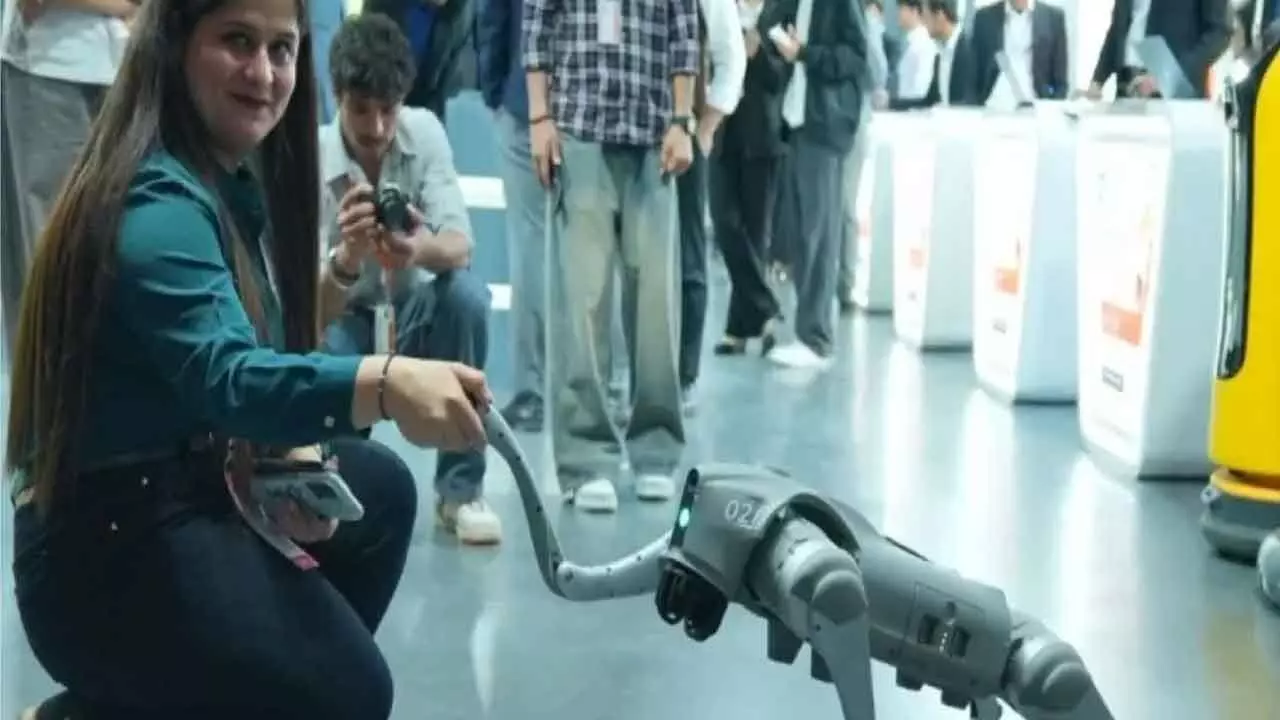
A recent controversy involving Galgotias University at the India AI Impact Summit 2026 has brought the importance of Intellectual Property Rights and ethical representation into sharp focus. The university has come under scrutiny after a robotic dog displayed at its stall was allegedly presented as an in-house innovation, while it was later identified by observers as the same robot dog is already commercially available product from a Chinese manufacturer in the market. With over 70% of robotics and humanoids robots research going on in the USA and China, this was a clear guess to take from the display.
Following the incident, the organisers reportedly asked the university to vacate its stall, and officials reiterated that exhibitors must not misrepresent commercially sourced products as their own innovations. The university later issued a clarification, stating that there was no intention to mislead and that the devices were displayed for academic demonstration purposes and no claim on any inventorship was made on the product.
This episode highlights a vital lesson: innovation must go hand-in-hand with intellectual honesty and legal compliance. Intellectual Property Rights—including patents, copyrights, trademarks, and design registrations—exist to protect genuine creators and ensure that original work receives due recognition and commercial protection.
What was surprising to note that a university like Galgotia having an IP policy and filing 50 patents every year could make such an error. Though there was no wilful intention behind the claim but this kind of misrepresentation of products, can damage institutional credibility, erode public trust, and undermine the spirit of research and development and attract passing off and infringement actions to be taken by the brand owner.
Hence, Indian institutions should look at actively filing patents, publish original research, and transparently acknowledge collaborations or imported technologies to strengthen both their reputation and the national innovation ecosystem.
To conclude, there is a need to bring in a culture where in we can clearly differentiate between original innovations and imported technologies by educating students about IP compliance and research integrity. The Galgotias University episode serves as a reminder that Intellectual Property Rights are not merely legal formalities—they are strategic tools that protect innovation, encourage investment, and uphold credibility.
As India moves forward in its journey towards technological self-reliance and global leadership, fostering a culture of original innovation supported by strong IP awareness and ethical practices will be essential.
(The writer is CEO, Resolute IP services LLP & Founder IPRAS)





